
Roofs & skylights
Roof, Skylight & Pergola Window Film
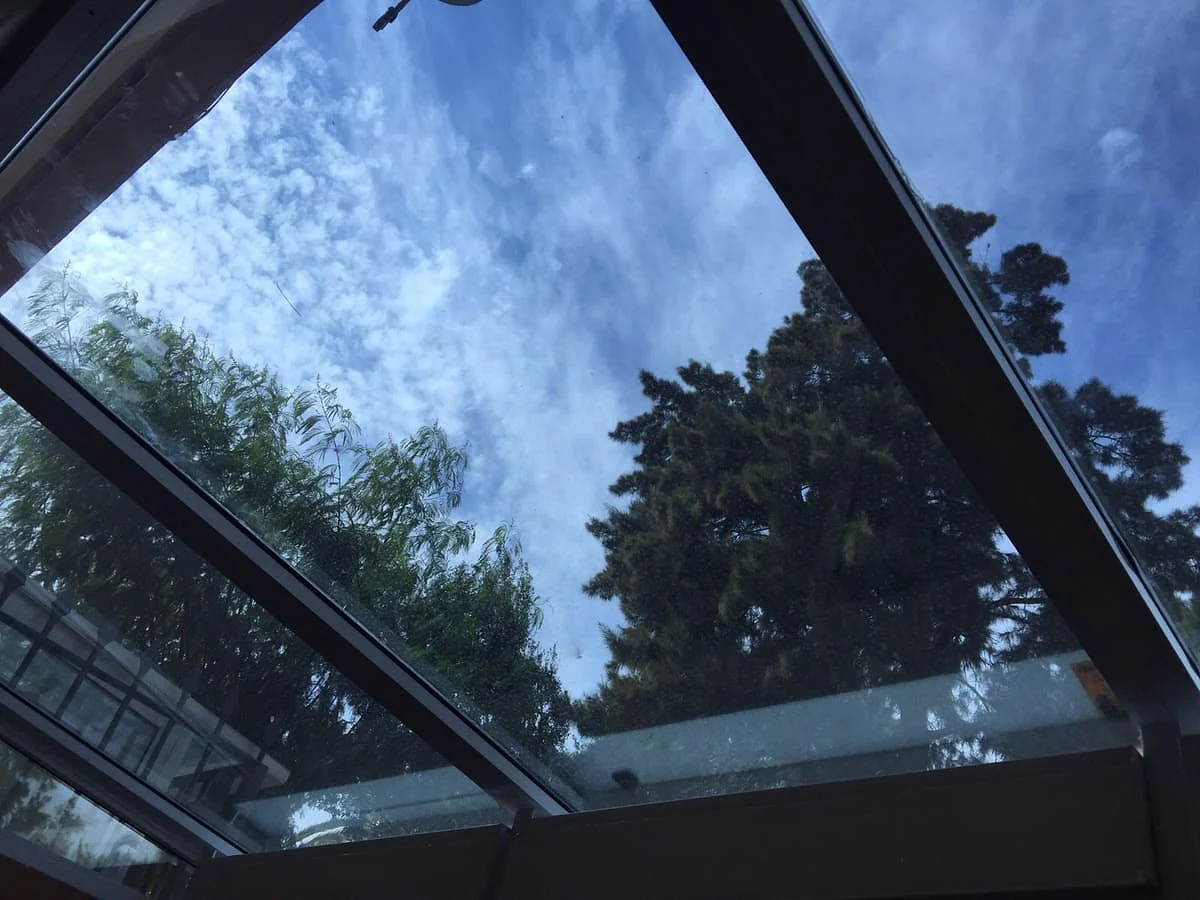
A glass roof is the hardest glazing on the building. Vertical windows get the sun at an angle for part of the day; a roof light gets it head-on for hours, and there is usually no practical way to shade it. It is also the glazing people most often assume nothing can be done about.
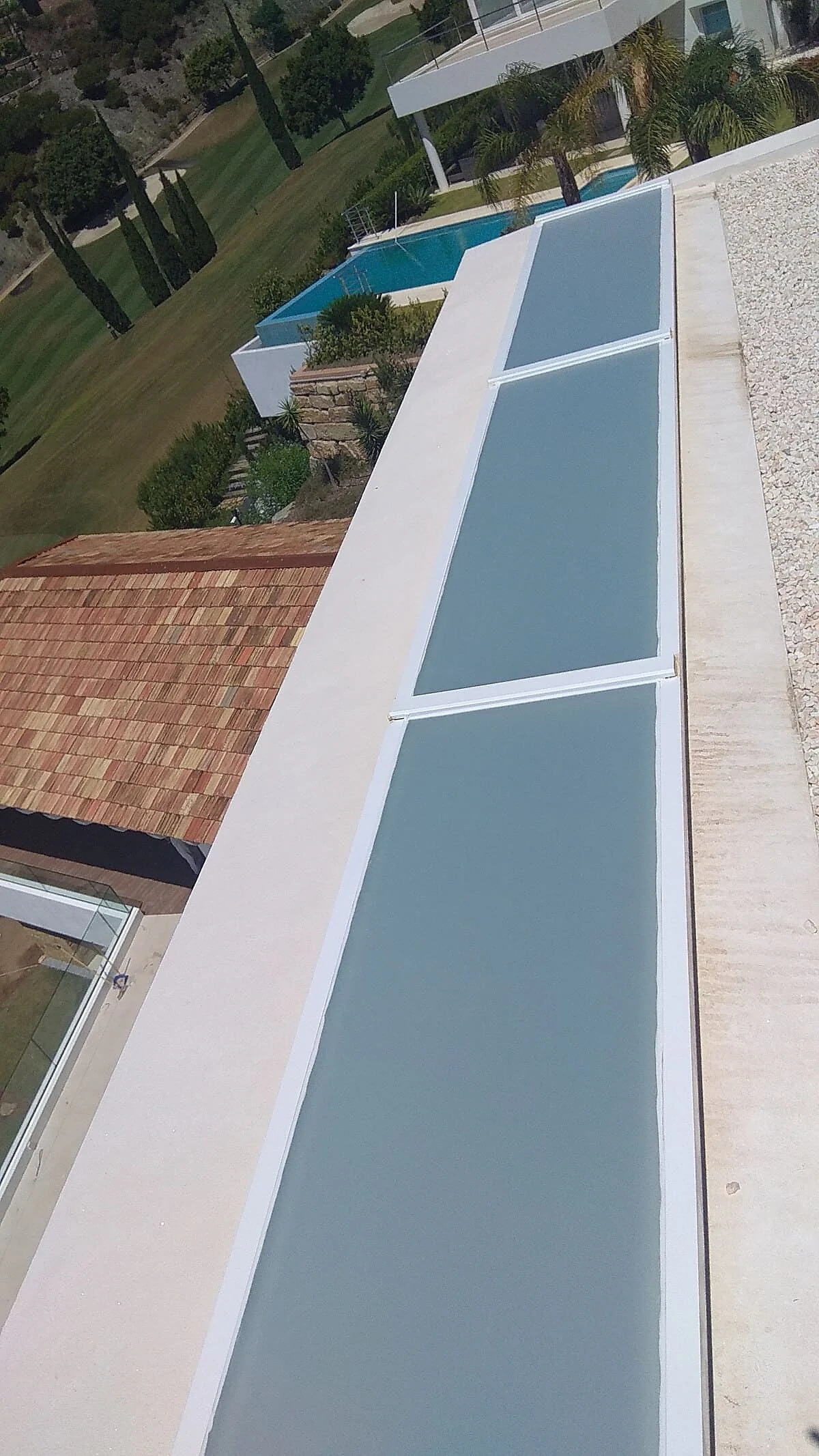
Overhead glass takes more direct sun than any vertical window, because at midday the sun is nearly perpendicular to it. Solar film applied to a glass roof, skylight, lantern or glazed pergola rejects up to 80% of that heat, and frosted grades add privacy where a roof is overlooked from above.
Why overhead glass is the worst case
The angle is the whole problem. Around midday the sun strikes a horizontal or shallow-pitched pane almost square on, which is when glazing transmits the most energy. A skylight over a stairwell or a glazed pergola over a terrace can therefore push heat into the property long after the vertical windows have gone into shade.
Film is applied to the existing glass, so there is no structural work, nothing added to the roofline, and no change to the light quality other than the reduction you asked for.
Privacy overhead
On terraced and stepped developments, common right along this coast, a flat roof or a roof light is frequently overlooked from the property above. Frosted grades give permanent privacy there while still letting daylight down into the space below.
Real jobs using this film
Common questions
Can film go on a glass roof or pergola?
Yes, and it is one of the highest-impact places to fit it, because overhead glass takes the most direct sun of anything on the building.
Can it be fitted from outside?
Where the underside cannot be reached safely we fit an exterior-grade film designed for that exposure. We confirm which is appropriate on the visit.