
Exterior application
Exterior-Applied Window Film
Most film goes on the inside, where it is protected and lasts longest. Sometimes that is not possible or not advisable, and the honest answer is to fit outside instead, with a film actually engineered for that exposure, not an interior product used in the wrong place.
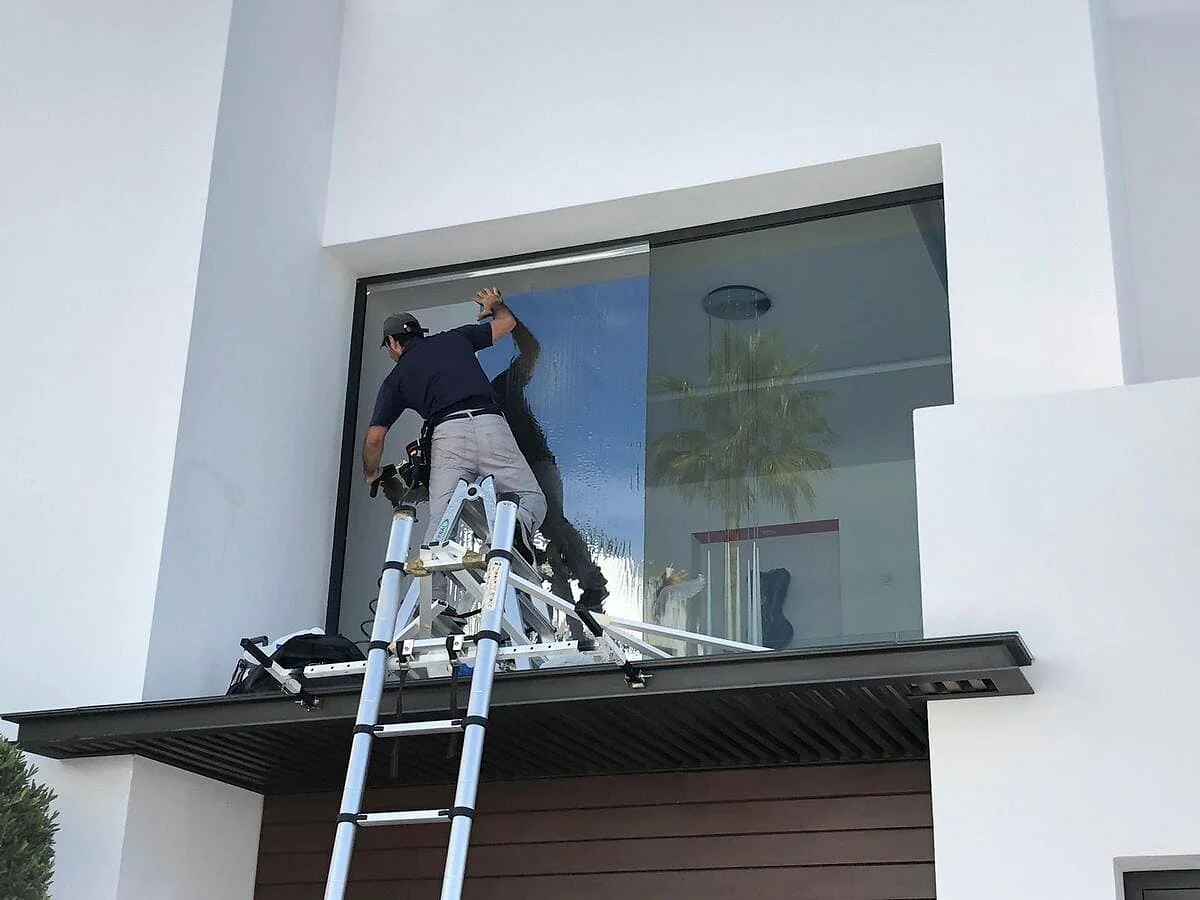
Exterior window film is applied to the outside face of the glass. It is used where the inside cannot be reached or worked on, fixed panes, atria, tall façades, occupied commercial premises, and on certain sealed units where an interior film would raise the risk of thermal stress in the glass.
When outside is the right call
Glazing with no internal access, panes too tall to work safely from inside, commercial premises that cannot be closed during the day, and glass units where the combination of glass type, tint and orientation makes an internal film a thermal-stress risk. Large façades and villa glazing set into deep reveals come up most often.
Exterior films use different adhesives and a harder surface coat because they live in the weather and get cleaned from outside. Fitting an interior film externally is a false economy that fails within a season, and we will not do it.

Common questions
Does exterior film last as long as interior?
Interior film is protected and generally lasts longer. Exterior film is built for the weather and performs well, but it is a considered choice rather than the default, we fit it where interior is not possible or not advisable.
Why would interior film be a risk?
On some sealed units the combination of glass type, tint and orientation raises thermal stress when film is added inside. Where that applies we fit externally instead, and we check it before quoting.